
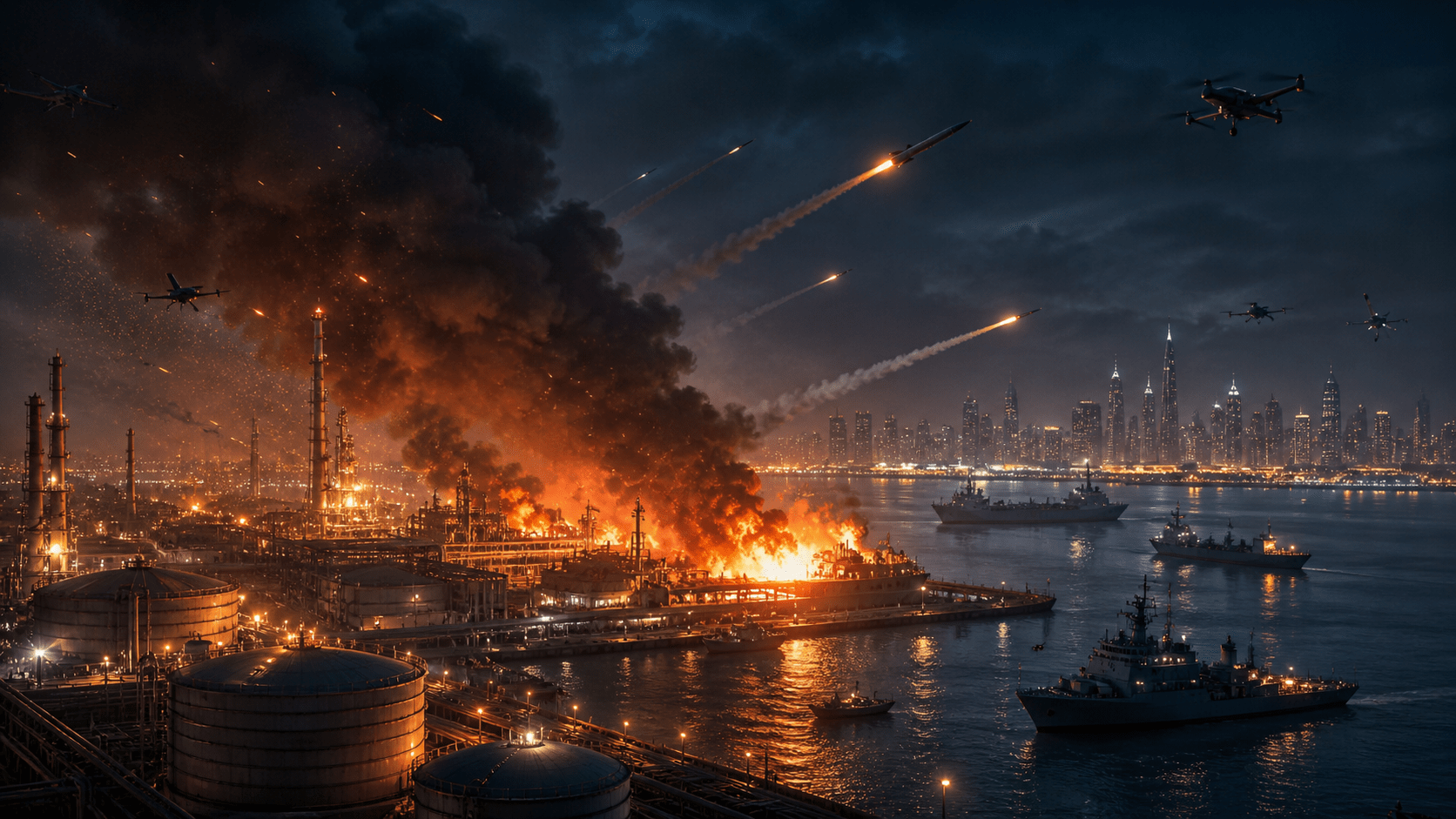

The Dubai skyline — once a symbol of Gulf prosperity and stability — now faces missile alerts and airspace closures as Iran’s attacks on the UAE reshape the region.
Photo: Unsplash
The fragile peace that followed a month-long Iran-US-Israel war has been shattered. Since February 28, 2026, Iran has launched an unprecedented campaign of missile and drone attacks on the UAE, targeting everything from oil refineries and tankers to residential towers and telecom infrastructure. As of May 5, 2026, the ceasefire declared on April 8 is in serious jeopardy — and the world is watching to see whether the Middle East plunges back into full-scale war.
This comprehensive article covers the full timeline of Iran’s attacks on the UAE, the human and economic cost, how the UAE is responding, what role the United States is playing, and — most critically — what happens next.
If you have been following the broader conflict, you may also want to read our earlier coverage of the
US–Israel–Iran War 2026: Causes, Consequences, and Global Impact
and our report on
America’s Longest Shutdown Crisis,
which helped fuel the geopolitical tensions now playing out across the Gulf.
Background: How Did Iran–UAE Tensions Reach This Point?

To understand why Iran is attacking the UAE in 2026, we must look back at a cascade of escalating events. The UAE hosts several critical US military installations, most prominently Al Dhafra Air Base, which served as a key launch platform for US-Israeli strikes on Iran beginning February 28, 2026. On that date, a coordinated US-Israeli airstrike killed Iran’s Supreme Leader Ali Khamenei and targeted Iran’s nuclear and military infrastructure in what Tehran branded an act of war.
Iran’s military codenamed its retaliation Operation True Promise IV. Iranian state media called the ensuing conflict the Ramadan War. Under this doctrine, Tehran announced it would treat any country hosting US forces — including UAE, Qatar, Bahrain, Saudi Arabia, and Kuwait — as a legitimate military target. The UAE, which had maintained careful diplomatic neutrality and economic ties with both the West and Iran for years, suddenly found itself at the epicenter of the most intense military confrontation the Gulf has seen in decades.
For context, the Abraham Accords of 2020 had normalized UAE-Israel relations — a move Tehran had viewed as a betrayal of the Arab world. That diplomatic shift, combined with the UAE’s hosting of US military assets, made it a primary target in Iran’s retaliatory strategy.
Full Timeline of Iran’s Attacks on the UAE (Feb–May 2026)
The Iran attacks on UAE timeline spans over two months and involves thousands of projectiles. Here is the most comprehensive chronology available:
2026
Following US-Israeli strikes that killed Supreme Leader Khamenei, Iran’s IRGC launches retaliatory missiles and drones across the Gulf. The first wave targets US bases at Abu Dhabi’s Al Dhafra. A Pakistani national is killed in Al Barsha, Dubai, from falling debris. Dubai International Airport briefly closes. Explosions echo across the Corniche, Al Dhafra, and Bateen districts.
2026
Drones breach Dubai International Airport Terminal 3 causing minor injuries. A fire breaks out at Jebel Ali Port from interception debris. Ruwais Industrial Complex — home to an ADNOC refinery producing 922,000 barrels/day — is struck, forcing a full shutdown. A tower in Dubai Creek Harbour is hit by a drone, catching fire. By March 18, UAE had intercepted 342 missiles and 1,699 drones.
2026
Foreign Minister Sheikh Abdullah bin Zayed Al Nahyan condemns the campaign as “terrorist attacks.” Six Gulf nations — UAE, Saudi Arabia, Kuwait, Bahrain, Qatar, and Jordan — jointly condemn Iran on March 26. Australia closes its embassy in Abu Dhabi and consulate in Dubai. UK begins “defensive air sorties” in UAE airspace.
2026
Iranian strikes hit the Emirates Global Aluminium plant at Al Taweelah (severe damage, operational shutdown). The Port of Fujairah is struck with ballistic missiles. A Palestinian national is killed in Abu Dhabi by a direct missile hit on a civilian car. By March 27 total: 378 ballistic missiles, 15 cruise missiles, ~1,835 drones.
2026
On April 2, the IRGC strikes an Oracle data center in Dubai. April 3 brings devastating strikes on KEZAD (Khalifa Economic Zones) and Habshan/Ajban gas facilities — killing one Egyptian national and injuring 16. On April 4, 23 ballistic missiles and 56 UAVs are intercepted; debris damages a residential tower in Dubai Marina.
2026
Major fires break out at the Borouge petrochemicals plant from interception debris. Iran launches fresh waves on April 6. Running total by April 9: 537 ballistic missiles, 2,256 drones, and 26 cruise missiles intercepted by UAE defenses.
2026
A ceasefire brokered between the US and Iran temporarily halts major operations. Iran reopens the Strait of Hormuz. The UAE cautiously welcomes the ceasefire but maintains full air defense readiness. For the first time in six weeks, no missile alerts are issued in Dubai or Abu Dhabi.
2026
US launches “Project Freedom” to escort stranded tankers through Hormuz. Iran responds by firing at UAE for the first time since April 8. A drone sparks a “large fire” at the Fujairah Petroleum Industries Zone. Three Indian nationals injured. UAE air defenses engage 12 ballistic missiles, 3 cruise missiles, and 4 drones. Commercial aircraft turn around mid-air as UAE airspace partially closes.
2026
UAE confirms air defenses are actively engaging a fresh barrage of Iranian missiles and drones for the second day running. Airspace restrictions extended to May 11. US Defense Secretary insists “the ceasefire is not over.” CENTCOM confirms Iran has attacked US forces 10+ times since April 8. Stock markets fall sharply; oil prices spike.
Casualties, Damage & Key Targets
UAE oil infrastructure targeted — Fujairah & ADNOC facilities struck | Unsplash
The human cost of Iran’s attacks on UAE has been significant though partially mitigated by highly effective air defenses. Deaths include two military personnel, one civilian contractor, and ten civilians — including a Pakistani national killed by debris in Al Barsha Dubai, an Egyptian national at the Habshan gas facility, a Palestinian national killed by a direct missile strike on his car in Abu Dhabi, and a Bangladeshi national in Fujairah.
Key Infrastructure Targeted by Iran
Iran’s strikes have been specifically designed to inflict maximum economic damage. Key targets included:
| Target | Location | Impact |
|---|---|---|
| Ruwais Industrial Complex / ADNOC Refinery | Abu Dhabi | 922,000 bpd refinery shut down |
| Fujairah Petroleum Industries Zone | Fujairah | Large fire; oil loading suspended |
| Emirates Global Aluminium Plant | Al Taweelah, Abu Dhabi | Severe damage; operational shutdown |
| Borouge Petrochemicals Plant | Abu Dhabi | Fires from interception debris |
| KEZAD Economic Zone | Abu Dhabi | 1 killed, 16 injured |
| Habshan & Ajban Gas Facilities | Abu Dhabi | Production halt |
| Oracle Data Center | Dubai | Struck April 2; AWS also reported outages |
| Dubai International Airport | Dubai | Closed 3 times; fuel tank fire |
| ADNOC Barakah Oil Tanker | Strait of Hormuz | Two drones; no injuries |
| Port of Jebel Ali | Dubai | Fire from interception debris |
“The UAE condemned in the strongest terms the renewed terrorist, unprovoked Iranian attacks targeting civilian sites and facilities in the country.”
— UAE Ministry of Foreign Affairs, May 4, 2026
How Dubai & Abu Dhabi Airports Were Affected by the Iran Attacks

Dubai International Airport — one of the world’s busiest air hubs — was forced to close multiple times and redirect aircraft as Iran’s attacks intensified. | Unsplash
Dubai International Airport (DXB) — the world’s busiest international airport — was hit three separate times during the Iran attack campaign. A drone struck a fuel tank in mid-March, causing a fire and temporarily halting flights. In a separate incident, a drone hit Terminal 3, injuring multiple people. Roads near the airport were closed while fires were extinguished.
On May 4, 2026, as the ceasefire collapsed, commercial aircraft bound for UAE turned around mid-air when four consecutive missile alert warnings were issued to residents’ mobile phones in Dubai, Abu Dhabi, and Sharjah. FlightRadar24 showed dozens of flights diverting to Muscat’s airport in Oman, circling over Al Ain, or returning to their point of origin.
Emirates Airlines — based in Dubai — repeatedly suspended and resumed limited operations at DXB. Abu Dhabi’s Zayed International Airport and Sharjah International Airport were also affected by airspace closures and diversions.
Four missile alerts issued within hours. Planes from Europe, Asia, and Africa diverted mid-flight. Dubai UAE airspace closed from late Monday through Tuesday morning. Only a few delays and cancellations remained by Tuesday dawn. Flights to and from Bahrain and several Iraqi airports saw the longest disruptions.
How Is the UAE Defending Itself Against Iran’s Attacks?
The UAE’s multi-layered missile defense network — combining US THAAD, Patriot PAC-3, and Israeli Iron Dome technology — has been the primary shield against thousands of incoming Iranian projectiles. | Unsplash
The UAE’s ability to absorb thousands of incoming missiles and drones without catastrophic civilian casualties is a testament to its investment in layered air defense systems. The country primarily relies on THAAD (Terminal High Altitude Area Defense) batteries and Patriot PAC-3 missile systems, both acquired from the United States. By late March, however, analysts at the Jewish Institute for National Security of America estimated that the UAE had burned through approximately 75% of its Patriot interceptor stock — a sobering reality that underscores the sheer scale of the Iranian campaign.
In a remarkable development, CNN reported that Israel provided an Iron Dome air defense system to help intercept Iranian projectiles over Emirati airspace — a striking sign of the deepening security cooperation between Israel and Gulf states against Iran. The UK also confirmed it had begun “defensive air sorties” in UAE airspace, while Australia sent a Boeing E-7 Wedgetail EWACS aircraft and additional missiles.
Authorities have imposed strict restrictions on filming or sharing footage of the attacks on social media, citing cybercrime laws. More than 66 people — including foreign nationals — were arrested in Dubai and Abu Dhabi for posting videos of missile interceptions. The government has tightly managed public communications to prevent panic, especially in Dubai, which is a global tourism and business hub.
Iran’s Attacks on Other Arab Countries: The Wider Regional Picture
The UAE was not Iran’s only target. As part of Operation True Promise IV, Iran simultaneously launched attacks on multiple Arab nations that host US military infrastructure. Understanding this regional picture is essential to grasping the full scale of the 2026 Middle East conflict.
The Financial Times reported on April 15 that Iran used a Chinese satellite to monitor US military bases and guide strike coordinates — a finding that drew immediate US accusations of Chinese complicity in the war.
The Ceasefire That Almost Was: April 8 & Its Collapse

The April 8 ceasefire brought brief hope to the region — but its foundations were fragile from the start, with the core dispute over Strait of Hormuz control left unresolved. | Unsplash
After six weeks of intense conflict, the US-Iran ceasefire of April 8, 2026 gave the world a brief moment of hope. Iran agreed to temporarily reopen the Strait of Hormuz, and major offensive operations paused. UAE residents were no longer hearing daily air raid sirens. Hotels in Dubai slashed prices and tried to attract tourists back.
But the ceasefire always had a fragile foundation. The core disagreement — over who controls the Strait of Hormuz and on what terms — remained completely unresolved. Iran maintained it had established a new “maritime regime” over the waterway, while the US and its allies refused to recognize Iranian jurisdiction over international shipping lanes.
The flashpoint came on May 4, 2026, when the US launched Project Freedom — a military escort operation to guide stranded commercial vessels through the strait. Iran viewed this as a direct violation of the ceasefire terms, and the IRGC responded by firing cruise missiles at US warships and launching drones at UAE oil facilities.
“The ceasefire is not over. This is a separate and distinct project, and we expected there would be some churn at the beginning.”
— US Defense Secretary Pete Hegseth, Pentagon briefing, May 5, 2026
The Strait of Hormuz: Why It Is the World’s Most Dangerous Chokepoint
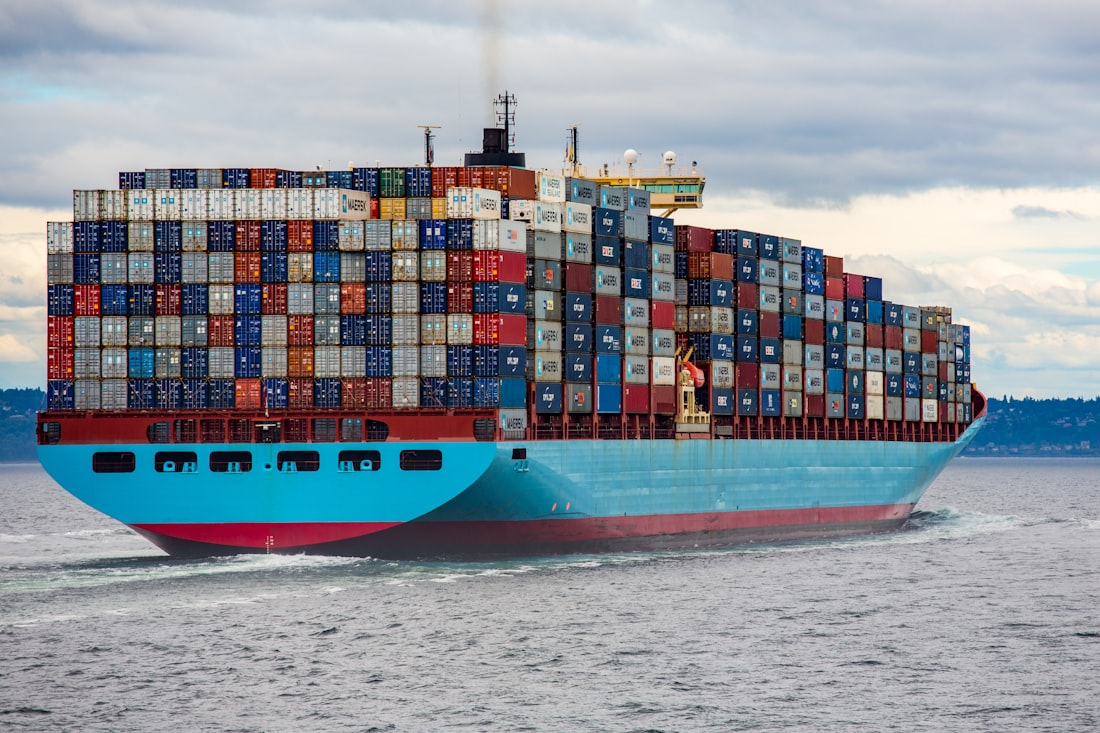
Oil tankers and commercial shipping vessels were stranded for weeks as Iran effectively closed the Strait of Hormuz — the world’s most critical energy chokepoint. | Unsplash
The Strait of Hormuz is a narrow waterway between Iran and Oman through which roughly 20% of the world’s oil supply passes daily. When Iran effectively closed the strait following the February 28 strikes, it sent immediate shockwaves through global energy markets. Ships carrying Persian Gulf oil to Europe and Asia were forced to divert or wait in anchorage — some for weeks.
Iran declared a new “maritime regime” over the strait, publishing IRGC maps showing claimed military control over waters on both sides of the passage. Tehran warned that any ship attempting to transit without Iranian authorization would be attacked. The US, meanwhile, insists the strait is international waters under the UN Convention on the Law of the Sea (UNCLOS).
Project Freedom — the US Navy’s escort operation — has already led to direct clashes. US CENTCOM confirmed that six Iranian small boats were sunk by American helicopter gunships on May 4, 2026, after they attempted to interfere with escorted commercial shipping. US Admiral Brad Cooper confirmed that American forces had also cleared Iranian mines from the strait’s navigable passage.
For a deeper dive into this geopolitical flashpoint, read our dedicated article:
Why Is the Strait of Hormuz So Important? Top 10 Reasons That Could Change the World in 2026.
Oil Prices, UAE Economy & Global Economic Impact

Global stock markets fell sharply as Iran’s May attacks triggered energy supply fears | Unsplash

Dubai’s thriving tourism sector took a severe hit as missile alerts emptied hotels and halted bookings | Unsplash
Impact on UAE’s Oil Sector
UAE oil production dropped by between 500,000 and 800,000 barrels per day during the attacks — a substantial portion of its output. The Ruwais ADNOC refinery — ordinarily producing 922,000 barrels per day — was forced into a full shutdown after a successful drone strike. Fujairah’s terminal, strategically vital because it allows UAE to export oil without transiting the Strait of Hormuz, was also struck.
Tourism and Business Disruption
Dubai and Abu Dhabi — two of the world’s most visited business and travel hubs — have been significantly disrupted. Hotels saw bookings cancelled en masse and steep discounts offered to attract remaining guests. Businesses issued remote-work orders. The Dubai International Financial Centre’s Innovation Hub was struck by a drone in March, damaging facade structures. Expatriates — who make up over 85% of the UAE’s population — faced repeated shelter-in-place orders that severely disrupted daily life and commerce.
Global Energy Markets
Global oil prices surged as the Strait of Hormuz blockade tightened supply for Europe and Asia. Countries dependent on Gulf energy scrambled for alternatives. The US Treasury Secretary confirmed an ongoing US naval blockade restricting ships entering or leaving Iranian ports, describing the Iranian economy as in “free fall.” Russia, by contrast, benefited significantly from elevated oil prices as a major alternative supplier — a strategic windfall from the conflict.
UAE GDP growth forecast was revised downward by 2.3 percentage points by IMF analysts. Global oil benchmark Brent crude rose by approximately $40/barrel since the conflict began. Stock market indices fell sharply on May 4 when the ceasefire appeared to collapse, with Gulf markets down 4–7% intraday.
US Response: Project Freedom, Trump’s Warnings & Gulf Security
US Navy warships have been deployed to the Strait of Hormuz under “Project Freedom” — escorting commercial vessels that have been stranded since the war began on February 28. | Unsplash
The United States has been deeply involved in defending the UAE and Gulf allies from Iran’s campaign. US forces shot down Iranian drones targeting commercial vessels, sank Iranian patrol boats, and flew B-52 bombers over Iranian territory. US-supplied THAAD and Patriot systems — partly operated by American personnel — have been the UAE’s primary defense layer.
President Trump launched Project Freedom on May 4, 2026 — framing it as a humanitarian mission to free hundreds of stranded sailors on ships trapped in the Persian Gulf. Two American-flagged merchant ships successfully transited the strait under US military escort on May 4 — the first commercial transit since February 28. US Admiral Brad Cooper confirmed that each and every threat from Iran on May 4 was “defeated.”
In a Fox News interview on May 4, Trump warned Iran it would be “blown off the face of the earth” if it targeted US Navy ships. He also called on South Korea — whose cargo ship came under Iranian fire — to join the escort mission. US Treasury Secretary Scott Bessent confirmed broad sanctions on any shipping company paying Iran for Hormuz transit passage.
Gulf states including Saudi Arabia, Kuwait, Bahrain, and the UAE have reportedly urged Trump not to end military operations before significantly weakening Iran’s capabilities — a sign that Gulf governments want the US to finish the job before any permanent ceasefire is signed.
How the World Is Responding to Iran’s Attacks on UAE

The international community has been divided in its response — with Gulf allies, the US, and Europe united in condemning Iran, while China’s role faces intense scrutiny. | Unsplash
The global response to the Iran attacks on UAE in 2026 has been a mixture of condemnation, diplomatic pressure, military support, and strategic calculation. Here’s how key players have responded:
| Country / Bloc | Response | Stance |
|---|---|---|
| 🇺🇸 United States | Military defense support, Project Freedom, sanctions on Iran, B-52 flights, sank 6 Iranian boats | Strongly Pro-UAE / Anti-Iran |
| 🇮🇱 Israel | Provided Iron Dome system to UAE; monitoring Lebanon ceasefire for violations | Strongly Pro-UAE |
| 🇬🇧 United Kingdom | Began “defensive air sorties” in UAE airspace; condemned Iranian attacks | Pro-UAE |
| 🇦🇺 Australia | Closed embassies; sent Boeing E-7 Wedgetail EWACS aircraft and missiles to UAE | Pro-UAE |
| 🇩🇪 Germany / EU | Pushing for diplomatic resolution; calling for emergency UN Security Council session | Neutral / Pro-Diplomacy |
| 🇵🇰 Pakistan | Acting as a neutral mediator; hosted Iran-US nuclear talks in April 2026 | Neutral / Mediator |
| 🇰🇷 South Korea | Evaluating joining Hormuz escort mission after cargo ship attacked by Iran | Considering Pro-UAE shift |
| 🇨🇳 China | Accused by US of “funding Iran” and providing satellite intelligence to IRGC for targeting | Pro-Iran (alleged) |
| 🇷🇺 Russia | Benefiting from elevated oil prices; has not condemned Iranian attacks | Passive Pro-Iran |
“Targeting commercial shipping and using the Strait of Hormuz as a tool of economic coercion or blackmail represents acts of piracy by Iran’s Revolutionary Guard Corps.”
— UAE Foreign Ministry Statement, May 4, 2026
What Happens Next? Expert Analysis & Three Key Scenarios
With the ceasefire effectively broken and Project Freedom underway, analysts are mapping three distinct scenarios for the Iran-UAE conflict’s trajectory. | Unsplash
Probability: Moderate–High
Probability: High (Most Likely)
Probability: Lower — But Still Possible
What Experts Are Saying
Analysts cited in international media argue that these strikes mark a “permanent rupture in the UAE’s strategic assumptions,” with Gulf states now facing a more dangerous and complex security environment. The depletion of interceptor missile stocks — with UAE and Kuwait having burned through 75% of their Patriot stockpiles and Bahrain at 87% — raises urgent questions about the sustainability of the current defense posture without rapid US resupply.
Iran’s Foreign Minister Abbas Araghchi warned on May 5 that both the US and UAE “should be wary of being dragged back into quagmire” — a signal that Tehran, despite its aggressive posture, is also wary of total war. Meanwhile, Gulf states have privately urged Trump to deliver a “comprehensive resolution of underlying threats” — which Gulf analysts define as permanently eliminating Iran’s capacity for ballistic missile and drone attacks.
For further analysis of how conflicts like this reshape global geopolitics, see our ongoing series on
the Strait of Hormuz crisis and its impact on the global economy.