
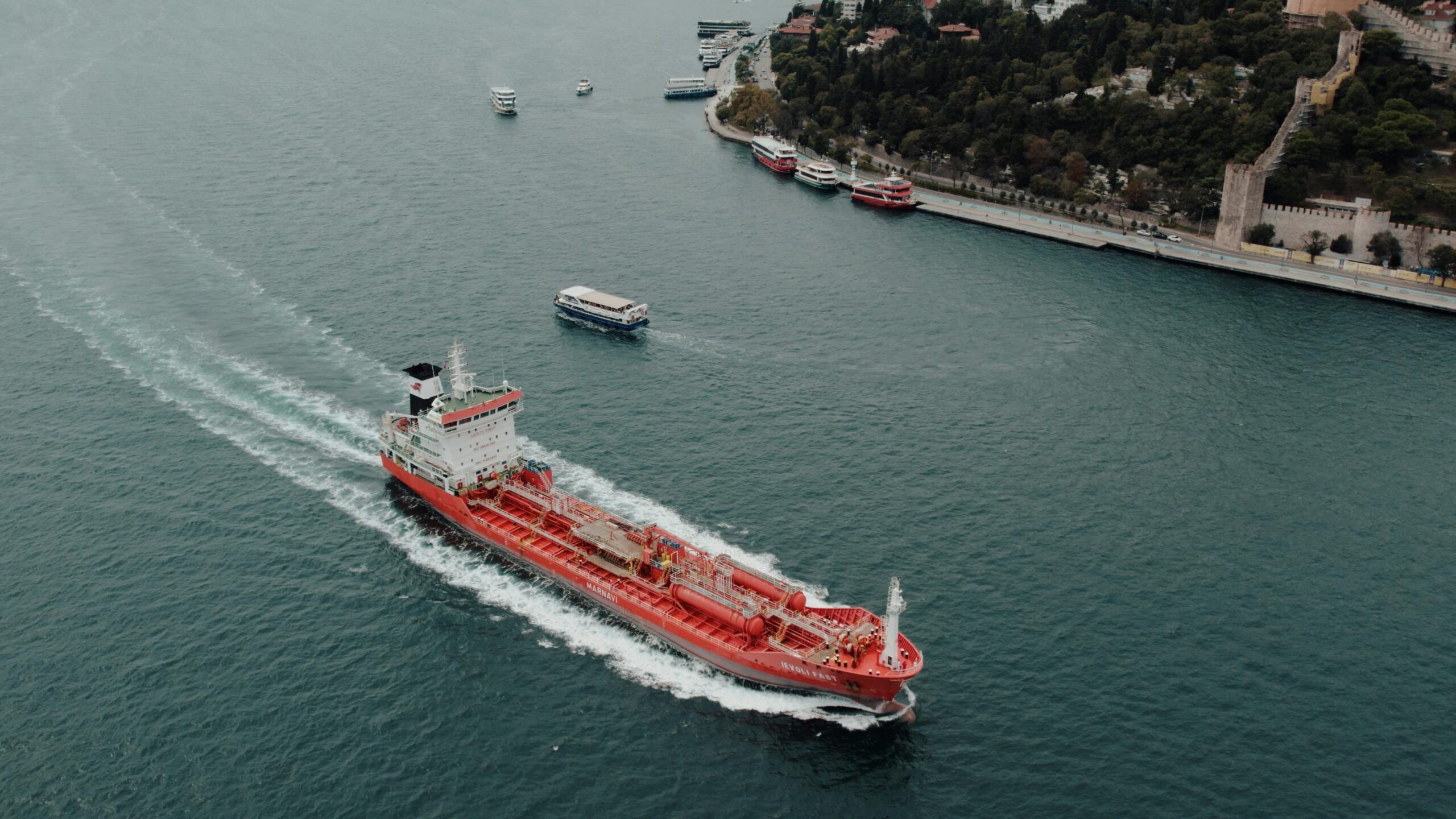
🔴 Breaking World News
📅 April 20, 2026✍️ DailyUpdates360 Team⏱ 14 min read🌍 World News
~20 mb/dOil blocked daily (pre-war)
$200/barrelAnalyst worst-case oil price
20,000+Seafarers stranded in Gulf
It happened again. On April 18, 2026, Iran’s Islamic Revolutionary Guard Corps (IRGC) announced that the Strait of Hormuz is closed — once more — to international shipping. Ships that had dared to enter the waterway came under gunfire. A tanker was struck. Another vessel was forced to turn back at gunpoint. And just like that, the world’s most critical oil chokepoint snapped shut again, sending shockwaves through global energy markets, commodity prices, and the geopolitical order.
If you’ve been following the Iran-US nuclear talks and ceasefire crisis, you already know the background is explosive. But why exactly is the strait closed again? What does this mean for your fuel bill, your food prices, and the global economy? And how did we get here? This in-depth guide breaks it all down.
📌 Related Reading on DailyUpdates360
Why Is the Strait of Hormuz So Important? Top 10 Reasons That Could Change the World in 2026
World News🕊️Iran-US Nuclear Talks 2026: Latest News, Islamabad Ceasefire Crisis & What Happens NextWorld News📈Best Oil Stocks to Buy Now (2026) — Why Energy Investors Are On High AlertFinance & Investing🌐Top 10 Trending Products to Sell Online in 2026 Dominating the Global MarketWorld News & Business
📋 Table of Contents
- The Background: How Did We Get Here?
- Full Timeline: From Operation Epic Fury to Today
- Why Is the Strait of Hormuz Closed Again in April 2026?
- Strait of Hormuz Closure: The Devastating Impact on Oil Prices
- Global Economy on the Brink: Food, Fertilizer & More
- Which Countries Are Most Affected?
- Are There Alternative Routes? The Pipeline Reality
- What Is the US Doing? Blockades, Seized Ships & Ultimatums
- What Comes Next? Scenarios for the Strait
- Frequently Asked Questions (FAQs)
- SEO Meta Data
1. The Background: How Did We Get Here?

The 2026 Iran-US-Israel conflict reshaped the entire Middle East energy landscape. (Image: Unsplash)
To understand why the Strait of Hormuz is closed, you need to go back to February 28, 2026. That day, the United States and Israel launched coordinated airstrikes against Iran under what was called Operation Epic Fury. The strikes targeted Iranian military facilities, nuclear sites, and leadership — and resulted in the death of Supreme Leader Ali Khamenei. It was one of the most dramatic military events in modern history.
Iran’s retaliation was swift and devastating. The IRGC launched missile and drone attacks on Israel, US military bases, and Gulf states. And most critically for the world economy, Iran closed the Strait of Hormuz on March 2, 2026 — the narrow, 33-kilometre-wide waterway through which roughly 20–25% of the world’s seaborne oil trade and about 20% of global LNG normally travels every day.
This was not just a symbolic move. The IRGC confirmed the closure officially, warned ships not to pass, laid sea mines across the waterway, and launched at least 21 confirmed attacks on merchant vessels. Major shipping firms immediately suspended all operations. The world’s energy lifeline had been severed. According to the U.S. Energy Information Administration (EIA), this represented the largest geopolitical oil supply disruption in history — two to three times larger than the 1973 oil embargo.
⚠️ Key Context
Before the crisis, approximately 20–21 million barrels of oil passed through the Strait of Hormuz every single day. The closure instantly removed close to 20% of global oil supplies from the market, according to economic analysis from the Federal Reserve Bank of Dallas.
2. Full Timeline: From Operation Epic Fury to the Re-Closure
Feb 28, 2026
Operation Epic Fury Launched
US and Israel launch coordinated airstrikes on Iran. Supreme Leader Ali Khamenei killed. Iran vows retaliation.
Mar 2, 2026
Strait of Hormuz First Closed
IRGC officially confirms closure. Tankers stop broadcasting AIS signals. No traffic in the strait. Iran charges over $1 million per ship as a “toll.”
Mar 4, 2026
China Given Preferential Access
Iran announces only Chinese vessels will be allowed passage, citing Beijing’s supportive stance. The geopolitical split deepens.
Mar 15–22, 2026
Trump Ultimatums Begin
Trump demands NATO and China help reopen the strait. Threatens to “obliterate” Iranian power plants. Iran threatens to mine the entire Persian Gulf.
Apr 8, 2026
Temporary Ceasefire Agreed
A ceasefire deal is reached in principle. The strait is nominally “open” again. Iran foreign minister signals full passage via social media — oil prices drop 10%.
Apr 11–12, 2026
Islamabad Talks Collapse
Iran and the US hold 21-hour direct negotiations in Islamabad. Talks collapse over uranium enrichment — US demands 20 years, Iran offers 3–5 years.
Apr 13, 2026
US Naval Blockade Begins
Trump announces full US Navy blockade of Iranian ports. Only ships leaving/entering Iranian ports to be targeted. Freedom of navigation for others maintained — in theory.
Apr 18, 2026
Strait Closed Again
Iran re-announces the Strait of Hormuz is closed, citing “repeated breaches of trust.” IRGC gunboats fire on Indian-flagged tankers. A French container ship reports rocket damage.
Apr 19, 2026
US Seizes Iranian Cargo Ship
USS Spruance fires on and seizes the Iranian cargo ship Touska in the Gulf of Oman. Trump threatens to destroy every Iranian power plant and bridge.
Apr 20, 2026
Situation as of Today
The strait remains closed. Ceasefire expires April 21. Talks may continue, but Iran says passage is “impossible” while the US blockade continues.
3. Why Is the Strait of Hormuz Closed Again in April 2026?

The US naval blockade of Iranian ports triggered Iran’s second closure of the Strait of Hormuz. (Image: Unsplash)
The re-closure of the Strait of Hormuz in April 2026 boils down to one central standoff: Iran will not reopen the strait while the US maintains its naval blockade on Iranian ports. And the US will not lift the blockade until a final nuclear deal is signed.
Here is what happened in the days leading up to April 18. Iran’s Foreign Minister Abbas Araghchi posted on X that the Strait of Hormuz was “fully open and ready for full passage” — a statement that sent crude oil prices plunging 10% in a matter of hours. But within 24 hours, the ceasefire unraveled. Trump confirmed the US naval blockade of Iranian ports would remain “in full force” until the deal was finalized. Iran’s National Security Council read that as a betrayal.
The IRGC responded by announcing the strait had returned to its “previous state” — under strict Iranian military control. Iran’s Parliament Speaker Mohammad Bagher Ghalibaf summed up Tehran’s position with brutal clarity: “It is impossible for others to pass through the Strait of Hormuz while we cannot.” Iranian gunboats immediately opened fire on passing ships. India summoned the Iranian ambassador after two Indian-flagged vessels were targeted. Traffic in the strait ground to a halt once more, according to maritime tracking firm Lloyd’s List.
💡 The Core Deadlock
Iran wants the US to lift its blockade of Iranian ports as a precondition for reopening the Strait. The US wants a final nuclear deal before lifting the blockade. Neither side is blinking — and the world’s energy supply hangs in the balance.
4. Strait of Hormuz Closure: The Devastating Impact on Oil Prices
The numbers are staggering. Before the 2026 crisis began, over 20 million barrels of oil and petroleum products passed through the Strait of Hormuz every single day. In early April, shipments through the strait had collapsed to roughly 3.8 million barrels per day — a drop of more than 80%, according to the International Energy Agency’s April 2026 Oil Market Report.
Pre-Crisis Daily Flow
>20 mb/d
Barrels of oil passing through Hormuz
Current Daily Flow
~3.8 mb/d
An 80%+ collapse in throughput
Oil Price (Feb 28 baseline)
~$70–75
Brent crude before the crisis
Analyst Worst-Case Target
$200/bbl
If closure extends through Q2 2026
The economic modeling is alarming. Research from the Federal Reserve Bank of Dallas found that a one-quarter closure raises average WTI oil prices to around $110 per barrel. A two-quarter closure could push prices to $132 per barrel. A three-quarter closure could see prices peak at $167 per barrel by late 2026. And Bloomberg Economics has warned that if the closure extends deep into Q2, oil could hit an unprecedented $200 per barrel — a level that would trigger global recession.
Meanwhile, global oil supply has already plummeted. According to the IEA, global oil supply dropped by 10.1 million barrels per day to 97 mb/d in March 2026 — the largest single-month disruption ever recorded. OPEC+ production fell 9.4 mb/d as Gulf producers simply ran out of storage space with nowhere to ship their oil.
For context on how energy market volatility affects investment opportunities, see our detailed analysis on the best oil stocks to buy now in 2026 — because energy sector volatility is creating both enormous risks and potentially historic opportunities for investors.
5. Global Economy on the Brink: Food, Fertilizer, LNG & More

The Strait of Hormuz closure has disrupted supply chains far beyond just oil — affecting food, fertilizer, LNG, and global trade. (Image: Unsplash)
The Strait of Hormuz crisis is not just an oil story. As the Atlantic Council’s analysis makes clear, the collapse of shipping through the strait represents two simultaneous crises: an immediate supply shock across multiple critical commodities, and a prolonged logistical disruption that will persist for months even after the strait reopens.
🌾 Food & Fertilizer: A Looming Agricultural Crisis
Here is the part that most people are not paying attention to yet. The Persian Gulf produces roughly 30–35% of global urea exports and 20–30% of global ammonia — the key ingredients in fertilizer. About one-third of the world’s traded fertilizers normally transit the Strait of Hormuz. Since the closure, urea prices have risen by 50% since the start of the war. Fertilizer shortages during the spring planting season in the Northern Hemisphere could reduce corn yields and drive up food prices well into 2027.
🔵 Liquefied Natural Gas: Europe’s New Nightmare
Qatar, the world’s second-largest LNG exporter, routes virtually all of its gas through the Strait. Europe has been importing large volumes of Qatari LNG to replace Russian gas since the Ukraine war. Parts of the world’s largest LNG plant have already sustained missile damage, with owner QatarEnergy warning repairs could take up to five years. Europe gets 12–14% of its LNG from Qatar through the strait — and those flows have been severely disrupted.
🔬 Helium, Aluminum & Industrial Materials
Helium distributors began rationing deliveries as early as April 2026. The Gulf is also a critical hub for aluminum and petrochemical feedstocks. Asian refineries have cut throughput by around 6 million barrels per day, with global crude runs expected to decline by 1 mb/d on average in 2026.
📊 IMF Verdict
The IMF has cut its global growth forecast for 2026, slashing the Middle East and North Africa forecast by 2.8 percentage points to just 1.1%. Iran’s own GDP is forecast to contract by 6.1%. Eurozone growth is now expected to slow to just 1.1%. Every $10 sustained increase in oil prices reduces global GDP growth by about 0.4%, according to economists at American University.
6. Which Countries Are Most Affected by the Strait Closure?
The impacts of the Strait of Hormuz blockade are not evenly distributed. Here is how different regions are being hit:
🇨🇳 China
China receives roughly one-third of its oil via the Strait of Hormuz and had about one billion barrels in strategic reserves before the crisis — enough for a few months of supply. China also has a unique advantage: Iran has allowed Chinese vessels preferential passage. This asymmetry is reshaping the geopolitical balance, pulling China deeper into the Middle East conflict as a de facto stakeholder on Iran’s side.
🇯🇵 Japan & South Korea
Approximately 70% of Middle Eastern oil delivered to Japan travels through the Strait of Hormuz. Japan and South Korea have among the highest energy dependency on this single waterway of any major economy. Both countries have been scrambling for alternative supply arrangements and tapping strategic reserves.
🇮🇳 India
India has been hit hard both as an energy importer and as a maritime nation. Two Indian-flagged ships came under direct fire from IRGC gunboats during the re-closure on April 18. India summoned Iran’s ambassador and has urgently sought alternative supply routes. India is also a significant user of Gulf LPG, which has seen some of the most acute supply shortages.
🇵🇰 Pakistan
Pakistan, heavily reliant on imported oil, officially requested that Saudi Arabia reroute supplies through the Red Sea port of Yanbu when the strait first closed in March. Saudi Arabia has provided some relief, though the volumes are far below what Pakistan normally receives through the strait.
🇪🇺 Europe
Europe is affected primarily through LNG disruption. With Qatari gas routes severed, European energy prices have spiked. The continent has been tapping stored reserves and looking to US LNG exporters to fill the gap.
7. Are There Alternative Routes? The Hard Pipeline Reality
One of the most frequently asked questions about the Strait of Hormuz closure is: can’t countries just go around it? The short answer is: partially, but not nearly enough.
Saudi Arabia can reroute some oil via its East-West Pipeline to Yanbu on the Red Sea. The UAE has a pipeline to Fujairah on the Gulf of Oman, bypassing the strait entirely. Iraq can route some exports through the ITP pipeline to Ceyhan in Türkiye. According to the IEA, exports through these alternative routes increased from less than 4 mb/d before the war to about 7.2 mb/d by early April. But that is still a fraction of the normal Hormuz throughput of over 20 mb/d. The gap between what can be rerouted and what normally flows through the strait is simply enormous.
⚠️ No Full Replacement Exists
Even with all alternative pipelines running at maximum capacity, the world cannot replace more than about 35–40% of normal Strait of Hormuz flow. The strait has no true alternative. This is exactly why it holds the world economy hostage.
For more context on why this waterway is so uniquely irreplaceable, read our full explainer: Why Is the Strait of Hormuz So Important? Top 10 Reasons.
8. What Is the US Doing? Blockades, Seized Ships & Ultimatums

The US Navy’s role in the Strait of Hormuz has escalated dramatically in 2026. (Image: Unsplash)
The US response to the Strait of Hormuz crisis has been a combination of military escalation and high-stakes diplomatic pressure. Here is where things stand:
On April 13, 2026, President Trump announced that the US Navy would begin a formal blockade of “any and all Ships trying to enter or leave” Iranian ports. The stated objective was to cost Iran revenue — Trump himself claimed the blockade was costing Iran $500 million per day — while maintaining freedom of navigation for non-Iranian vessels. In practice, however, the combined effect of the US blockade and Iran’s own closure has produced a near-total shutdown of the waterway.
Then on April 19, in a dramatic escalation, the US Navy guided missile destroyer USS Spruance fired on and seized an Iranian cargo ship, the Touska, in the Gulf of Oman. Trump announced the seizure on social media, warning Iran in stark terms: “We’re offering a very fair and reasonable DEAL, and I hope they take it.” He threatened to destroy every power plant and bridge in Iran if talks collapse.
Diplomatically, Trump has been playing a classic brinkmanship game — repeatedly signaling openness to a deal while threatening catastrophic consequences if one isn’t reached. After the Islamabad talks failed over uranium enrichment timelines, both sides have continued back-channel communications, but no breakthrough has emerged. The ceasefire is set to expire on April 21, 2026.
For the broader nuclear dimension of this crisis, our team has published a comprehensive breakdown of the Iran-US nuclear talks, the Islamabad ceasefire collapse, and what happens next.
9. What Comes Next? Three Scenarios for the Strait of Hormuz
Scenario A: Negotiated Deal (Most Hopeful)
Both sides reach a nuclear framework agreement in the coming weeks. The US lifts its port blockade. Iran reopens the Strait of Hormuz fully. Oil prices fall sharply. The IEA’s base case forecast assumes a resumption of regular deliveries from the Middle East by mid-2026, though not back to pre-war levels. This scenario would still leave lasting damage to energy infrastructure, shipping confidence, and global supply chains.
Scenario B: Prolonged Stalemate (Most Likely Near-Term)
Both sides continue the current standoff — Iran controls the strait, the US blockades Iranian ports, and negotiations inch forward without breakthrough. Oil prices stabilize in the $100–130 range. The global economy absorbs significant but manageable damage. The risk of accidental military escalation remains high.
Scenario C: Full Military Escalation (Worst Case)
The ceasefire collapses completely after April 21. The US strikes Iranian energy infrastructure as Trump has threatened. Iran mines the Persian Gulf and escalates attacks on tankers. Oil hits $150–200 per barrel. The IMF projects this scenario would push major economies into recession and drive global inflation to multi-decade highs. In this scenario, even alternative supply routes become contested.
📌 What to Watch
The key date is April 21, 2026 — when the current ceasefire formally expires. Watch for: whether back-channel talks produce any framework agreement; whether the US modifies or lifts its port blockade; and whether Iran’s IRGC begins allowing any commercial traffic through the strait as a confidence-building measure.
✅ Conclusion
The Strait of Hormuz closure in 2026 is not just a geopolitical headline — it is a real and immediate threat to the global economy, energy security, food supply, and international stability. What began as a military confrontation between the US, Israel, and Iran has become the largest oil supply disruption in recorded history, dwarfing even the 1973 Arab oil embargo.
The re-closure on April 18 shows just how fragile any progress has been. Iran’s position is simple: the strait stays closed while Iranian ports are blockaded. The US position is equally firm: the blockade stays until a nuclear deal is done. With the ceasefire expiring April 21, the world is holding its breath.
One thing is certain: the outcome of this standoff will define global energy markets, geopolitics, and economic trajectories for years to come. Stay with DailyUpdates360 World News for the latest updates as this situation evolves.
❓ Frequently Asked Questions (FAQs)
Everything you need to know about the Strait of Hormuz crisis in 2026.
Why is the Strait of Hormuz closed again in 2026?▼
Iran closed the Strait of Hormuz again on April 18, 2026, citing the US refusal to lift its naval blockade on Iranian ports following the collapse of the Islamabad ceasefire talks. The IRGC announced that passage through the strait would remain under strict Iranian military control until the US restores full freedom of navigation for Iranian vessels. Iranian gunboats opened fire on several tankers to enforce the closure.
When did Iran first close the Strait of Hormuz in 2026?▼
How much oil normally passes through the Strait of Hormuz?▼
What impact has the Strait of Hormuz closure had on oil prices?▼
Which countries are most affected by the Strait of Hormuz closure?▼
Are there alternative routes to the Strait of Hormuz?▼
What is the US doing about the Strait of Hormuz closure?▼
How does the Strait of Hormuz closure affect food prices?▼
📅 PUBLISH DATEApril 20, 2026
© 2026 DailyUpdates360 — Complete Updates, One Click Away
World News · Technology & AI · Business & Marketing · Privacy Policy