
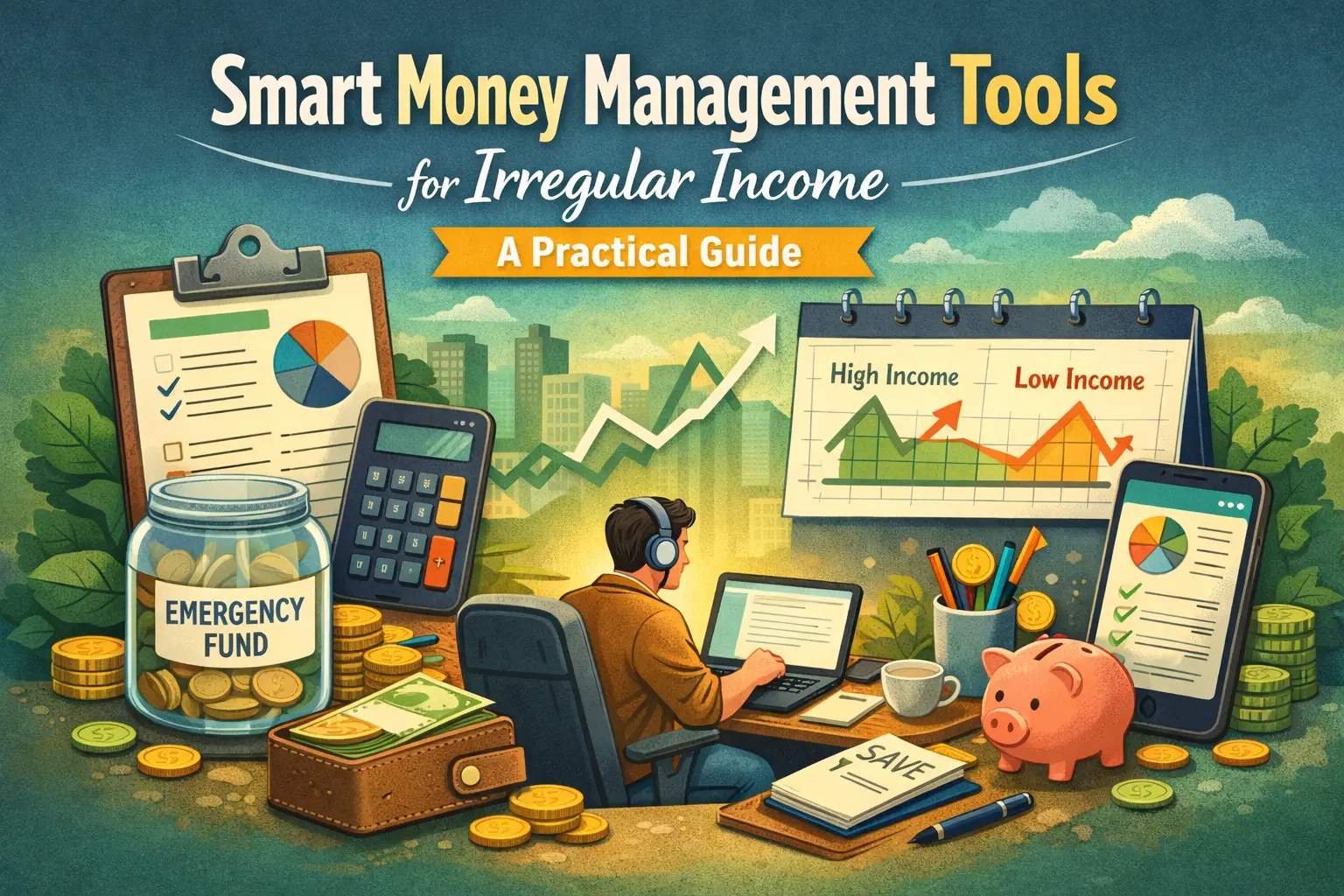
Managing money is challenging for everyone—but when your income changes every month, it can feel overwhelming. Freelancers, gig workers, creators, small business owners, and commission-based professionals often struggle with budgeting, saving, and planning because their earnings are unpredictable.
The good news? With the right money management tools and strategies, you can take control of your finances, reduce stress, and build long-term stability—even with irregular income.
This guide breaks down the best tools and practical methods designed specifically for people who don’t receive a fixed monthly paycheck.
Understanding the Challenge of Irregular Income
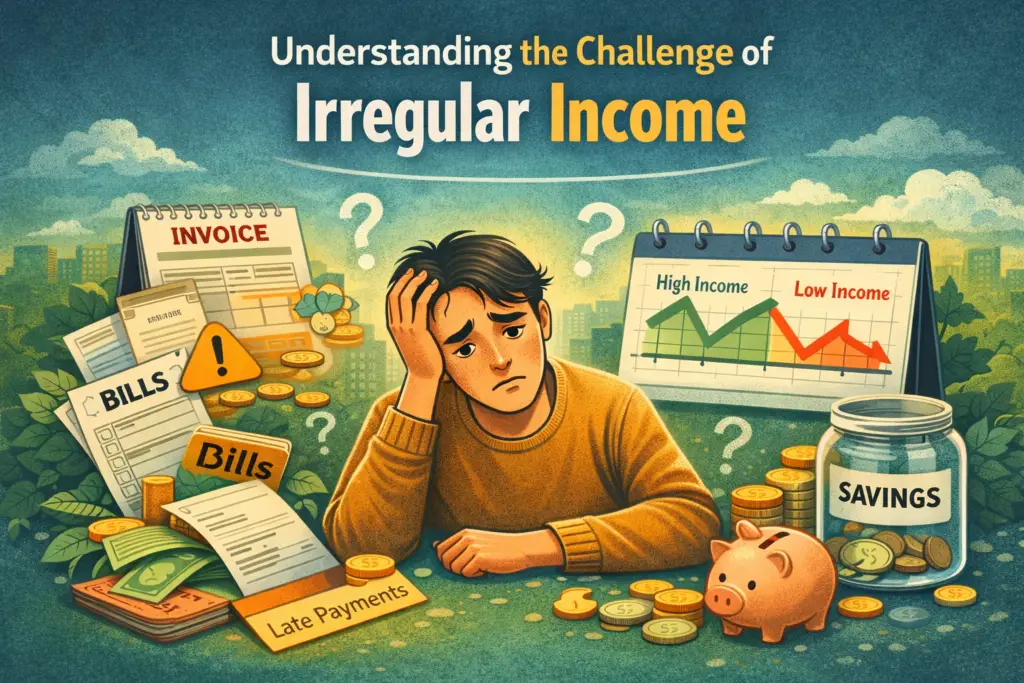
Unlike salaried employees, people with irregular income face problems such as:
- Uncertain monthly cash flow
- Difficulty creating traditional budgets
- Trouble saving consistently
- Stress around bills and emergencies
This makes standard budgeting advice ineffective. What you need instead is flexible financial planning supported by smart tools.
Best Money Management Tools for Irregular Income Earners
1. Zero-Based Budgeting Apps
Zero-based budgeting works well for fluctuating income because it gives every dollar a purpose after you receive it.
How it helps:
- You budget based on money you already have
- No assumptions about future income
- Better control over spending
Popular tools:
- YNAB (You Need A Budget)
- EveryDollar
2. Income Averaging Calculators
These tools calculate your average monthly income based on the last 6–12 months instead of guessing future earnings.
Benefits:
- Creates a realistic baseline
- Helps plan fixed expenses safely
- Reduces financial anxiety
You can use simple spreadsheets or apps that allow income history tracking.
3. Expense Tracking Tools
Tracking expenses is critical when income is unstable. Knowing where your money goes helps you adjust spending during low-income months.
Why it matters:
- Identifies unnecessary expenses
- Improves financial awareness
- Supports smarter decisions
Tools to try:
- Mint
- PocketGuard
- Spreadsheets (Google Sheets / Excel)
4. Emergency Fund Automation Tools
For irregular earners, an emergency fund is not optional—it’s essential.
Smart approach:
- Save more during high-income months
- Pause saving during low-income months
- Automate transfers when possible
Helpful tools:
- High-yield savings accounts
- Banking apps with auto-save features
Aim for 6–9 months of expenses, not income.
5. Bill Management & Reminder Apps
Missed payments can cause unnecessary stress and fees.
Use tools that:
- Send payment reminders
- Track recurring bills
- Show upcoming obligations
Recommended options:
- Prism
- Simplifi
- Google Calendar (manual setup)
6. Sinking Fund Tools
Sinking funds allow you to save gradually for known future expenses like taxes, insurance, or equipment upgrades.
Why sinking funds work:
- Prevent large financial shocks
- Make expenses predictable
- Ideal for freelancers and self-employed individuals
Most budgeting apps allow custom categories for sinking funds.
Smart Money Management Tips for Irregular Income
- Base your budget on your lowest-earning month
- Separate business and personal finances
- Pay yourself a “salary” from high-income months
- Track income trends quarterly
- Avoid lifestyle inflation during good months
Final Thoughts
Having irregular income doesn’t mean your finances have to be chaotic. With the right money management tools, flexible budgeting methods, and smart planning, you can build stability, confidence, and long-term financial security.
The key is not controlling your income—but controlling how you manage it.
Start small, stay consistent, and let the tools do the heavy lifting.