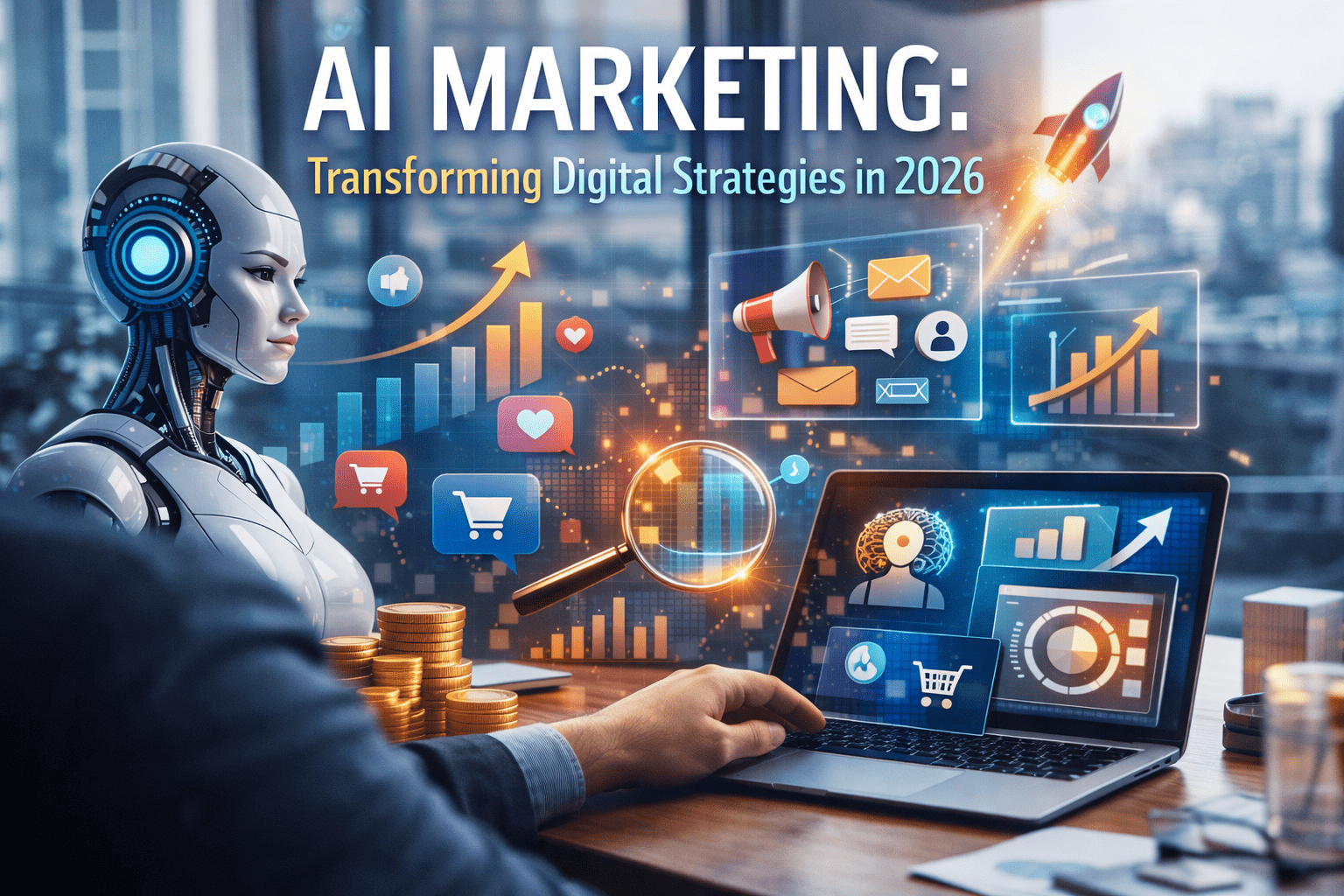
Artificial Intelligence (AI) is no longer just a buzzword — it’s a core driver of modern marketing. From automating routine tasks to personallizing customer experiences, AI empowers businesses to compete smarter and faster. In this comprehensive guide, we’ll break down what AI marketing really means, explore essential stats and trends, and show how businesses can leverage AI to boost results.
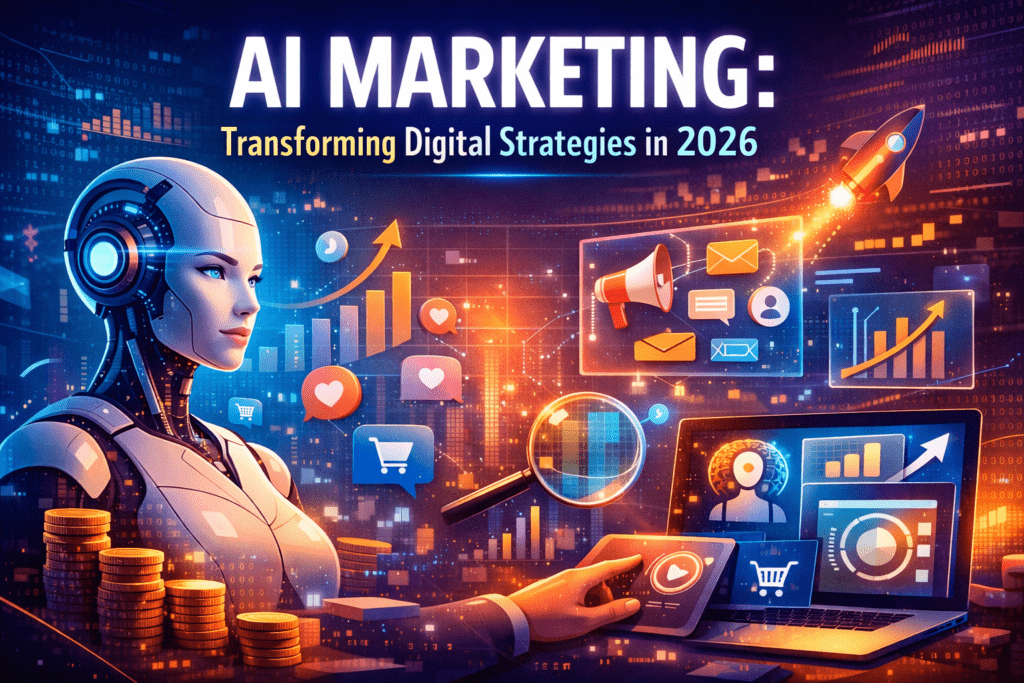
What Is AI Marketing?
AI Marketing refers to the use of artificial intelligence technologies — such as machine learning, natural language processing, and generative AI — to automate, optimize, and enhance marketing activities. These can include:
- Content creation (blogs, social media, emails)
- Customer segmentation and personalization
- Predictive analytics
- Chatbots and customer service automation
- Ad targeting and optimization
AI transforms traditional marketing by helping marketers make better decisions faster and with greater precision.
📊 Key AI Marketing Statistics (2025–2026)
These data points show how deeply AI has become integrated into marketing:
📈 Market Growth & Adoption
- The AI marketing market reached ~$47.3 billion in 2025, up nearly 300% from 2020, and is projected to hit $107.5 billion by 2028 at a ~36.6% CAGR.
- Globally, around 88% of marketers now use AI daily, with most businesses planning further investment.
- By 2026, 76–92% of companies are expected to adopt AI for core marketing functions.
📊 Efficiency & ROI
- AI reduces content production time by up to 80%.
- Companies using AI report 37% higher conversion rates compared to those using traditional methods.
- AI personalization leads to improved retention and engagement.
📈 Content & Automation
- 85–93% of marketers use AI for content creation and planning.
- Dynamic email and targeted campaigns powered by AI show higher open and click-through rates.
These numbers reveal not only widespread adoption but also the tangible business benefits that AI delivers.
Major AI Marketing Trends
Personalized Experiences
AI analyzes customer data to deliver highly tailored experiences — from product recommendations to personalized emails. Personalization drives engagement and increases conversions.
Content at Scale
Generative AI tools (like ChatGPT, Jasper, or Canva’s Magic) enable faster creation of blog posts, social media content, and email sequences — giving teams more output with less effort.
📌 Pro Tip: Use guidelines from platforms like HubSpot’s AI Trends Report to structure your AI content workflows and maximize engagement.
Chatbots & Customer Interaction
AI chatbots provide 24/7 real-time support, answering queries and qualifying leads without human intervention. This not only saves costs but improves customer satisfaction.
Predictive Analytics
AI predicts trends in customer behavior, helping brands target high-value prospects and allocate budget wisely.
Benefits of AI in Marketing
Here’s why companies are investing heavily in AI:
🔹 Improved Targeting
AI segments audience data at scale, so ads reach people most likely to convert.
🔹 Time & Cost Efficiency
Automation frees marketers from repetitive tasks like scheduling posts or analyzing reports.
🔹 Better ROI
Most businesses see a measurable increase in ROI once AI is embedded across their marketing workflows.
Challenges & How To Overcome Them
While AI offers clear advantages, marketers face challenges like:
- Tool overload: Too many AI tools without clear strategy
- Data quality issues: Poor input data limits AI effectiveness
- Skill gaps: Teams need training to use AI tools effectively
👉 Solution: Start with a clear AI roadmap that aligns with business goals, and ensure teams receive proper upskilling.
How to Implement AI Marketing in Your Business
- Identify priority areas: customer segmentation, content creation, lead scoring
- Choose AI platforms that integrate with your stack (e.g., CRM, social media tools)
- Train your team on best practices and ethical AI use
- Measure impact regularly (ROI, engagement, conversion rates)
- Iterate: AI insights help refine future campaigns
Useful Links & Resources
- Want to learn how AI boosts productivity? Check out this AI marketing statistics overview.
- Curious about adoption trends? See AI adoption data for 2026.
Conclusion
AI Marketing is not a futuristic trend — it’s the present. The biggest brands and most innovative small businesses are already using AI to gain competitive advantage. With adoption rates soaring and real ROI gains in sight, marketers who embrace AI now will dominate their niches in the next decade.