
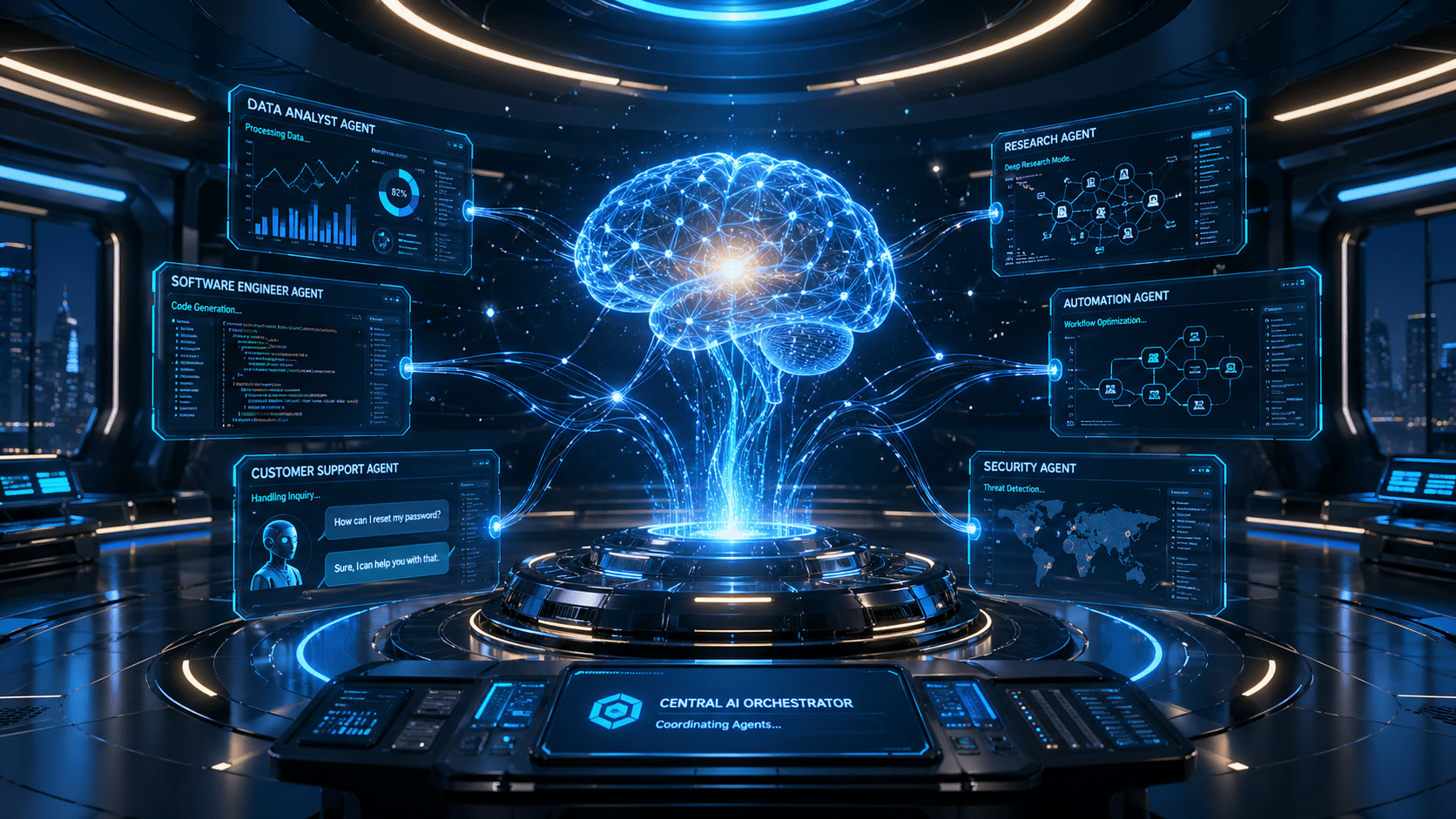
AGENTIC AI systems are AI models that can plan, make decisions, and take actions autonomously — without needing a human to guide every step. Unlike regular chatbots, they use tools, browse the web, write code, and complete multi-step goals on their own. They’re reshaping how businesses operate in 2025.
Imagine hiring a personal assistant who never sleeps, never gets tired, and can manage dozens of tasks at once — from researching competitors to booking meetings to writing full project reports. That’s not science fiction anymore. That’s agentic AI.
In 2025, agentic AI systems have moved from research labs into real offices, hospitals, and classrooms. Whether you’re a curious beginner, a business professional, or a student exploring tech careers, understanding agentic AI isn’t optional anymore — it’s essential.
Let’s break it all down in plain English.
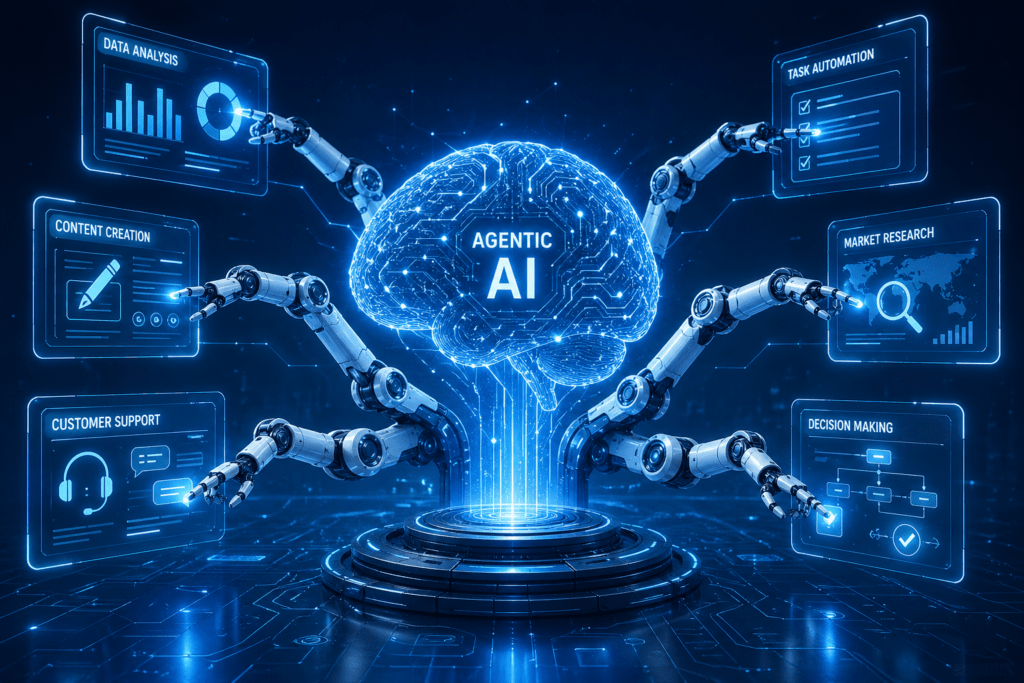
What Is an Agentic AI System?
At its core, an agentic AI system is an artificial intelligence that doesn’t just answer questions — it takes action. Traditional AI tools like ChatGPT (in its basic form) respond to one prompt at a time. You ask, it answers, end of story.
Agentic AI goes several steps further. It can:
- Break a big goal into smaller sub-tasks
- Use external tools (web search, code execution, file reading)
- Decide what to do next based on previous results
- Loop through steps until the goal is achieved
- Work with minimal or even zero human input mid-task
Think of the difference like this: a traditional AI is like a vending machine — you press a button, you get a result. An agentic AI is like a skilled employee — you tell them the goal, and they figure out how to get there.
Simple Definition: Agentic AI = AI that perceives its environment, makes plans, uses tools, and takes action to complete a goal — autonomously.
How Do Agentic AI Systems Actually Work?
This is where it gets fascinating. Agentic systems are built on top of large language models (LLMs) like GPT-4 or Claude, but they’re supercharged with additional components. Here’s the basic architecture:
1. The Core Brain (LLM)
The LLM acts as the reasoning engine. It understands your goal, generates plans, and interprets results. It’s the “thinking” part of the system.
2. Tools and Integrations
This is what separates agents from plain chatbots. Agentic AI can plug into tools like:
- Web browsers (for real-time search)
- Code interpreters (to run Python scripts)
- APIs (to send emails, update databases, book calendars)
- File systems (to read and write documents)
3. Memory
Agents use short-term memory (within a session) and sometimes long-term memory (stored notes or databases) to remember context and avoid repeating work.
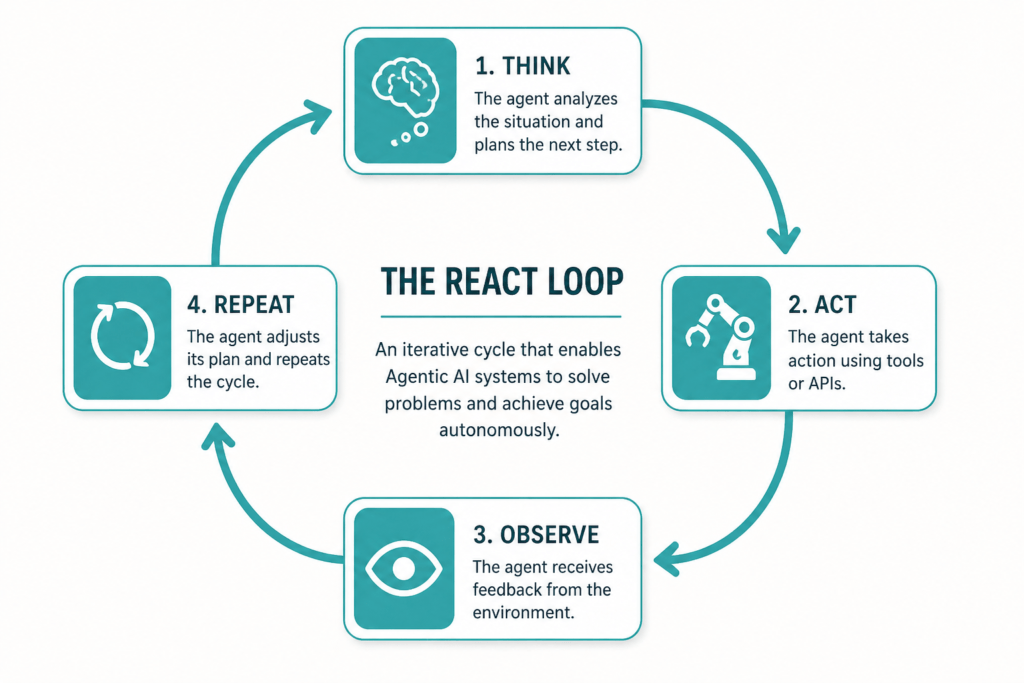
4. The Planning Loop
The agent follows a “think → act → observe → repeat” loop, often called the ReAct framework. At each step, it decides: “What should I do next to get closer to the goal?”
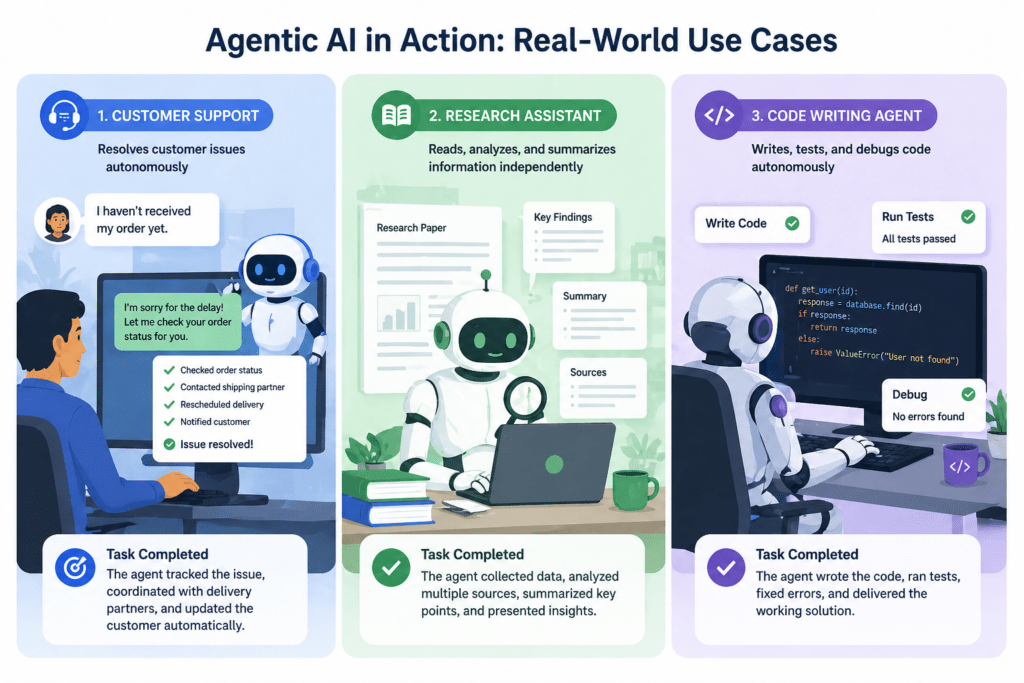
Real-World Examples of Agentic AI in Action
Still feels abstract? Here are some concrete examples that show just how powerful these systems are becoming.
Customer Support Agent
A company deploys an agentic AI to handle customer complaints. When a user says “My order hasn’t arrived,” the agent doesn’t just reply with a template — it looks up the order in the database, checks the shipping API, detects the delay, and proactively issues a refund or reschedules delivery. Zero human involvement needed.
Research Assistant
A student asks an agentic AI to “write a 10-page research report on climate change economics.” The agent searches the web for recent papers, reads and summarizes sources, organizes an outline, writes each section, and formats the final document — all in under 10 minutes.
Software Developer Agent
Tools like GitHub Copilot and emerging coding agents can now read a bug report, write a fix, test it, and open a pull request — all without a developer writing a single line of code. This is the future of software development.
For more on how AI is reshaping careers, check out our article on AGENTIC AI IN 2026
Agentic AI vs. Traditional AI: Key Differences
It’s worth pausing to clearly understand what makes agentic AI different from what most people are already familiar with. The table below captures the core distinctions:
- Traditional AI: Responds to a single prompt. No memory. No tools. No autonomy.
- Agentic AI: Pursues multi-step goals. Uses memory and tools. Acts autonomously across sessions.
- Traditional AI: Like a calculator — precise but passive.
- Agentic AI: Like an intern with initiative — it figures things out and gets things done.
This difference is why companies like researchers tracking AGI progress see agentic systems as a major milestone in AI development.
Why Agentic AI Matters for You Right Now
You might be thinking: “This sounds impressive, but how does it affect me?” Fair question. Here’s the honest answer — it already is affecting you, whether you realize it or not.
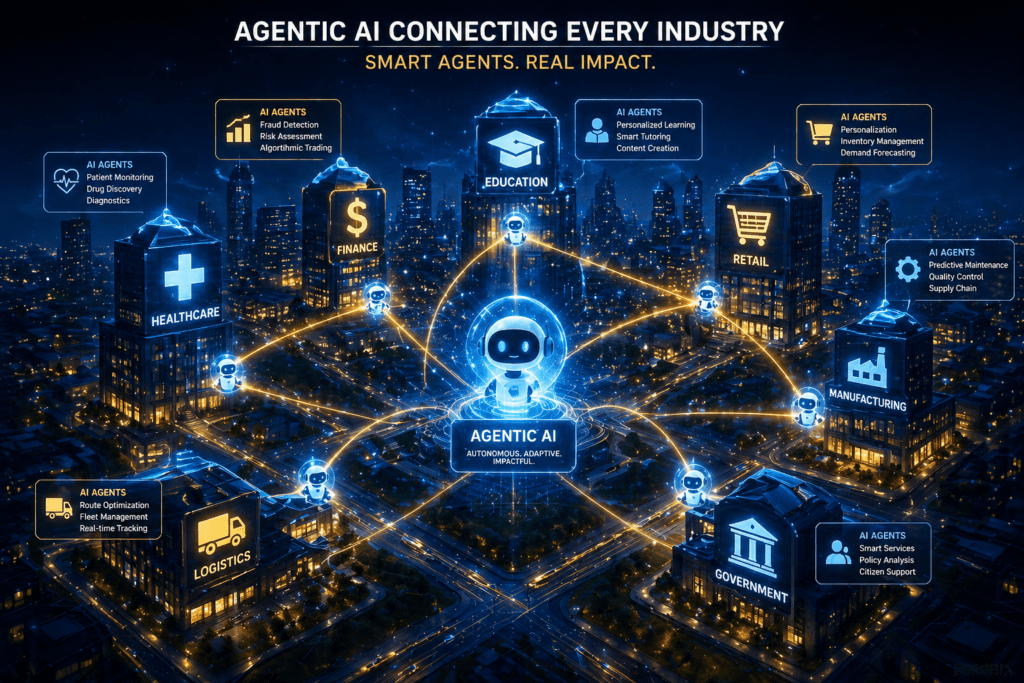
By 2025, agentic AI is actively being used in:
- Healthcare: Agents that monitor patient records, flag anomalies, and alert doctors
- Finance: AI agents that execute trades, detect fraud, and generate compliance reports
- Education: Personalized tutoring agents that adapt lessons in real time
- E-commerce: Shopping agents that compare prices, apply coupons, and place orders on your behalf
- If you’re a professional, this is both exciting and a call to action: learning to work with and direct agentic AI could be the most valuable skill you develop this decade.
Want to understand how AI fits into modern digital tools? Read our complete breakdown of top AI tools for productivity..
Challenges and Risks: The Honest Picture
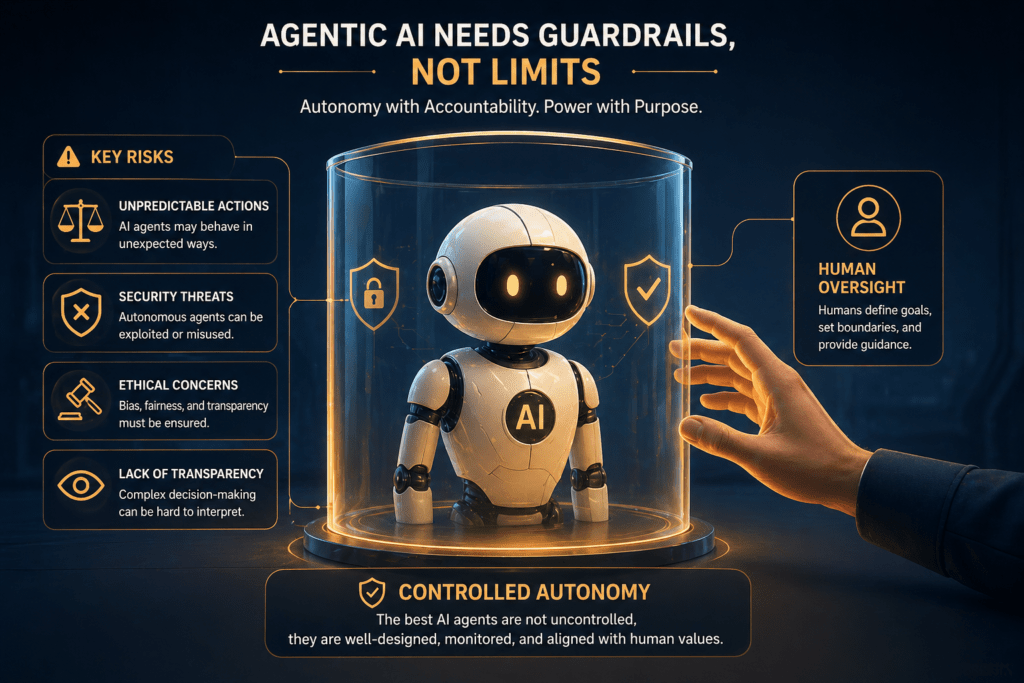
It’s not all sunshine and efficiency. Agentic AI systems come with real risks that are worth understanding.
Unpredictability
Because agents make decisions autonomously, they can sometimes take unexpected actions. An agent given too much freedom might delete files, send unauthorized emails, or make purchases you didn’t intend.
Security Vulnerabilities
Agents connected to external tools are exposed to prompt injection attacks — where malicious content tricks the AI into harmful behavior. This is an active area of research and one of the biggest concerns in deploying production-level agents.
Over-reliance
The more we outsource decisions to AI agents, the more critical it becomes to verify their outputs. Blind trust in an autonomous system — especially in high-stakes domains like medicine or law — remains dangerous without proper oversight.
The good news? The AI industry is actively working on safety frameworks, human-in-the-loop designs, and minimal footprint principles (the idea that agents should ask for only the permissions they absolutely need). Check out our feature on BEST AI APPS FOR SMALL BUSINESSES (2026 GUIDE) to dive deeper.
Key Takeaways
- Agentic AI systems can plan, use tools, and complete multi-step tasks with minimal human input.
- They’re built on LLMs enhanced with memory, tools, and planning loops (like ReAct).
- Real-world applications span customer service, research, coding, healthcare, and finance.
- The core difference from traditional AI: agents act; chatbots only respond.
- Safety, oversight, and careful design remain critical for responsible deployment.
- Understanding agentic AI is a high-value skill for professionals in any field.
Conclusion: The Agent Era Has Already Begun
Agentic AI systems aren’t a distant future concept — they’re here, they’re evolving rapidly, and they’re already reshaping how work gets done. From automating customer support to accelerating scientific research, the scope of what these systems can do is expanding every month.
The question isn’t whether agentic AI will change your industry. It will. The real question is whether you’ll be someone who understands it, directs it, and uses it strategically — or someone who gets caught off guard by it.
Start small. Explore tools like Claude, AutoGPT, or CrewAI. Learn the concepts. Ask better questions. Because in the agent era, the people who understand how to collaborate with autonomous AI will have a massive edge.
Found this guide helpful? Stay ahead of AI trends — subscribe to Dailyupdates360 for weekly breakdowns of the technology reshaping our world.Explore More AI Guides ↗
Frequently Asked Questions
Q1: What is the difference between an AI agent and a chatbot?
A chatbot responds to a single message at a time and has no ability to take independent action. An AI agent, by contrast, can set goals, use external tools, make decisions across multiple steps, and complete complex tasks autonomously — far beyond simple conversation.
Q2: Is agentic AI safe to use in business?
Agentic AI can be safe when deployed with proper guardrails: limited permissions, human-in-the-loop review for critical actions, and regular monitoring. Businesses should start with low-stakes use cases and gradually expand as trust is established with the system.
Q3: What are the best agentic AI tools available today?
Leading agentic AI platforms in 2025 include Anthropic’s Claude (with computer use), OpenAI’s Operator, AutoGPT, CrewAI, LangChain-based agents, and Microsoft Copilot with agentic features. The right tool depends on your use case — coding, research, or business automation.
Q4: Do I need technical skills to use agentic AI?
Not necessarily. Many agentic AI products now come with user-friendly interfaces requiring no coding knowledge. However, having a basic understanding of how they work — as you’ve now gained from this article — will help you get significantly better results and avoid common pitfalls.
If you’re looking to dive deeper into the latest insights, trends, and expert guides on topics that matter, visit Newworldupdates.com. Explore well-researched, up-to-date content designed to keep you informed, ahead of the curve, and empowered with valuable knowledge—all in one place.