A deep analysis of America’s longest government shutdown crisis, its economic impact, political causes, and what it means for the future.
Table of Contents
Overview of the Crisis
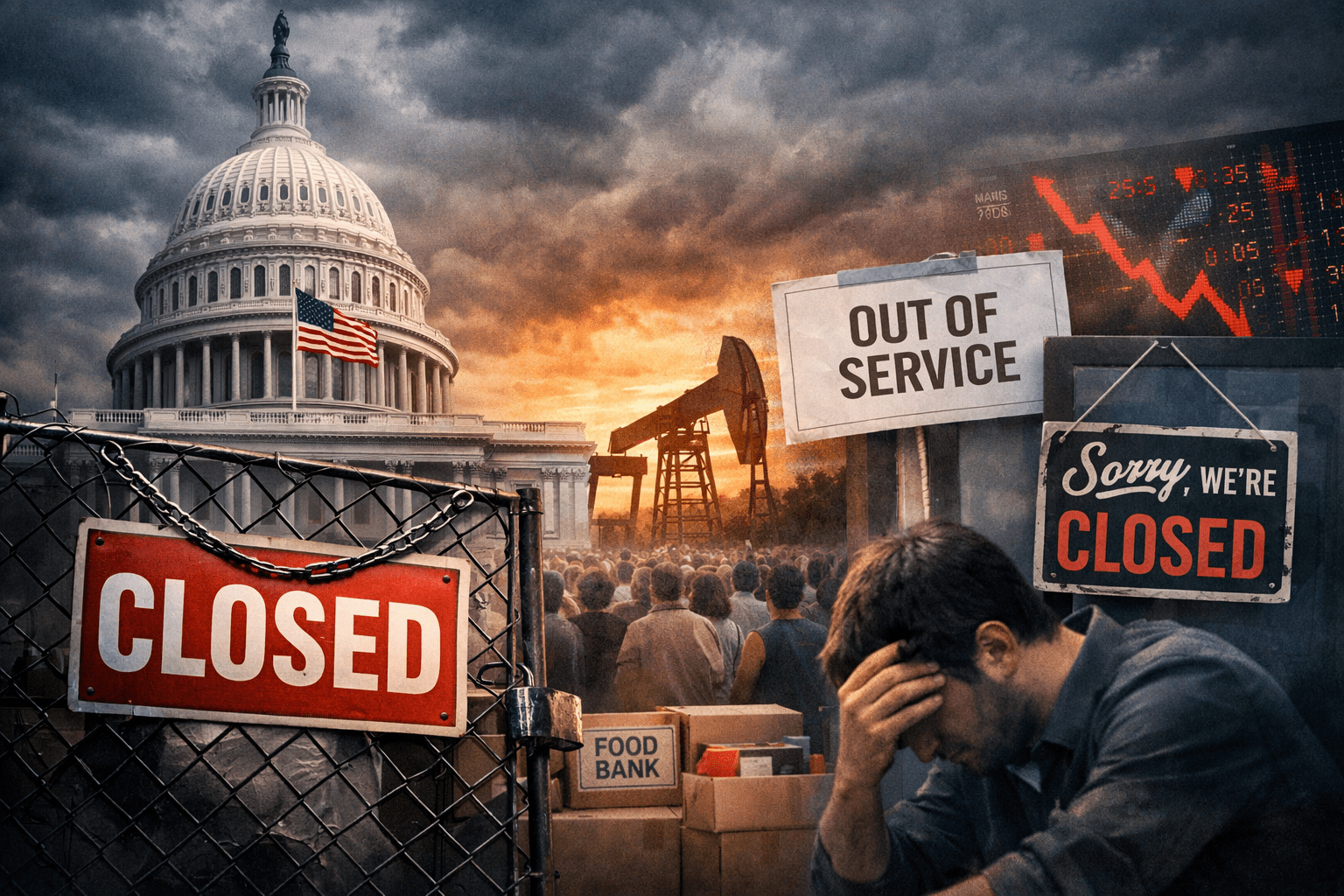
America is experiencing one of the most prolonged and disruptive government shutdown crises in its modern history. What began as a political disagreement over budget allocations quickly escalated into a nationwide issue affecting federal agencies, workers, and millions of citizens.
The shutdown is not just a political story—it is an economic and human crisis. From delayed salaries to halted public services, the consequences are visible across the country.
For a broader perspective on global instability, you can also explore
global fuel crisis trends, which highlight how interconnected economic systems are.

How the Shutdown Unfolded
The crisis began in October 2025 when Congress failed to pass essential funding bills. This triggered a chain reaction across federal agencies, leading to furloughs and service disruptions.
- October 2025: Federal funding expires
- November 2025: Temporary funding resumes operations
- February 2026: Partial shutdown hits Homeland Security
- April 2026: Crisis continues with uncertainty
Each phase of the shutdown added new layers of complexity, making recovery more difficult and prolonging uncertainty.
Human & Economic Impact
The most severe consequences of the shutdown are felt by ordinary workers. Over 100,000 federal employees have faced delayed or missing paychecks, forcing many families into financial distress.
According to the
Congressional Budget Office, government shutdowns reduce GDP growth and create long-term economic uncertainty. Businesses dependent on federal operations also suffer, leading to a ripple effect across industries.
You may also read about future economic trends here:
AI and the future economy in 2026.

Political Battle Behind It
At the core of the shutdown lies a deep political divide. Lawmakers have struggled to reach agreements on funding priorities, particularly in areas such as national security and public spending.
Reports from
Reuters
and
Bloomberg
highlight how political gridlock continues to delay solutions.
Both sides blame each other, but the result remains the same: prolonged uncertainty and growing public frustration.
Future Outlook
Experts warn that unless structural reforms are introduced, similar shutdowns may occur more frequently. The current system of temporary funding measures is proving unsustainable.
To understand how governance systems are evolving globally, explore:
AI governance trends.
The longer the crisis continues, the greater the long-term damage to economic stability and public trust.
Conclusion
America’s longest shutdown crisis is a reflection of deeper systemic issues within governance. While temporary solutions may resolve immediate problems, lasting change will require structural reform and political cooperation.
Until then, the nation remains in a state of uncertainty—waiting for resolution, stability, and a return to normalcy.